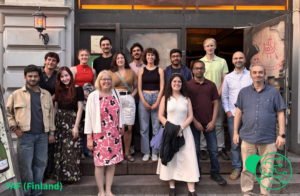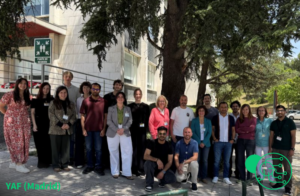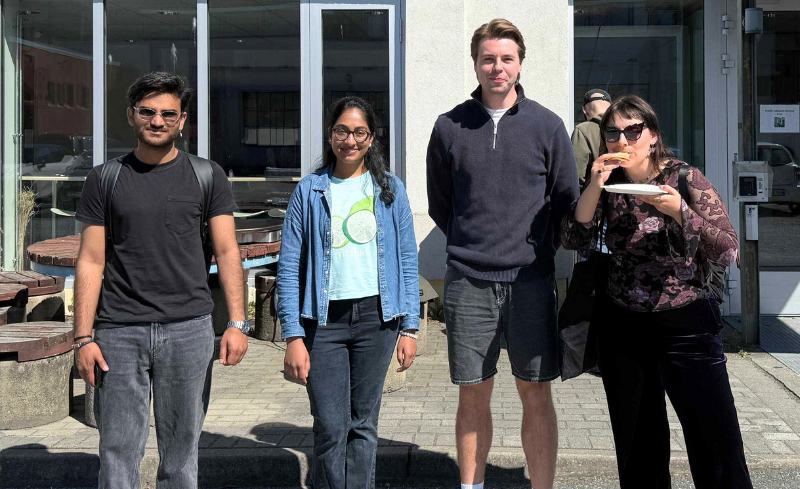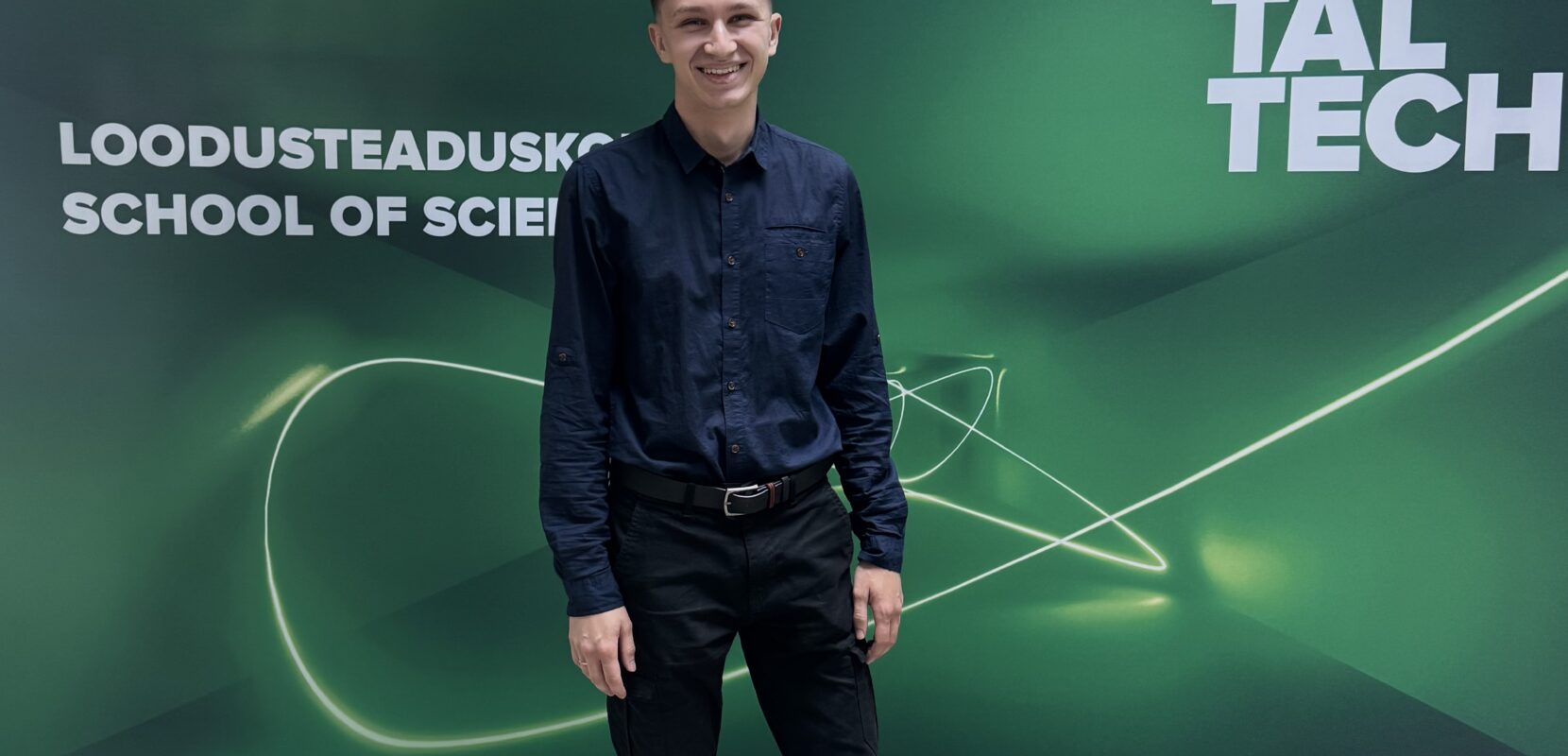
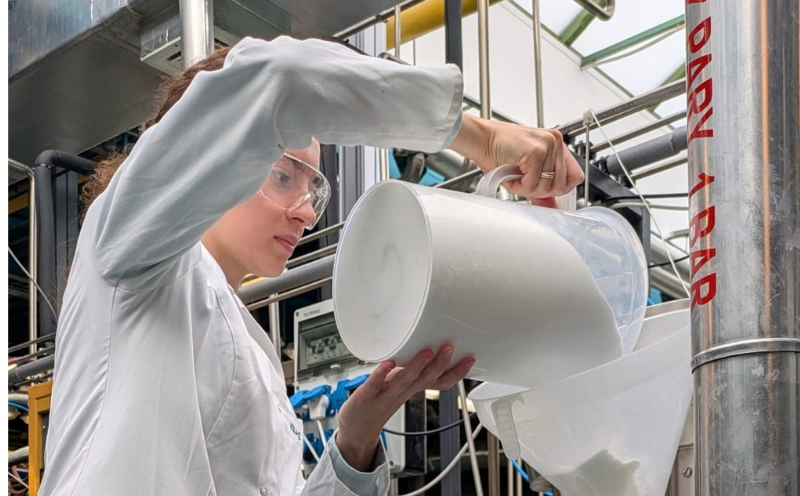
Angelika Sofia Bolkvadze shares her experience at the COST Action Mic2Food Training School.
***
Ever since I learned about industrial bioreactors at university, I have been curious to try them out and grow microbial biomass in them. Participating in the COST Action Mic2Food Training School gave me the opportunity to do exactly that—and for me, it was a dream come true!
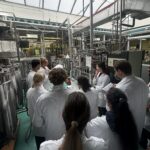
Training School took place at the pilot plant of the Department of Biotechnology and Food Microbiology at Poznań University of Life Sciences in Poland. Its topic was “Mycoprotein production: from upstream processing to downstream processing, product formulation and techno-economic simulation”. Every day was filled with informative lectures and hands-on practical sessions.
Getting to know the bioreactor
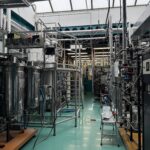
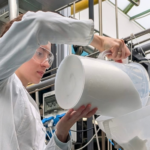
Most of the first few days were spent in the university’s pilot plant, learning about the structure and operation of a 60 L bioreactor. The facility covers more than 400 square metres and supports bioprocess research, technology scale-up, and the assessment of economic feasibility. It was filled with intriguing biotechnology equipment, including bioreactors ranging from 0.5 L to an enormous 1500 L vessel used for production trials.
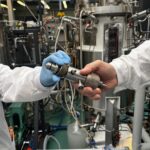
During the practical sessions, we prepared the bioreactor, mixed the cultivation media, and carried out sterilisation. The inoculation step was particularly memorable: using 2 L of inoculum was very different from what I was used to in a university laboratory!
That was also a moment of realisation. In industrial production, a bioreactor of this size could be used to prepare the inoculum for a much larger vessel. What seemed large to me was still just one step towards production at an industrial scale. The biomass was grown under optimal conditions for about 27 hours—a surprisingly short time.
From cultivation to biomass analysis
Before harvesting, we heat-treated the mycoprotein biomass to reduce its RNA content. What surprised me was that this important step was associated with a biomass loss of around 30%. It was a striking example of how a necessary processing step can affect the final yield.
Once the Fusarium venenatum biomass (mycoprotein) had been harvested, it was time for analysis. We examined it under the microscope, measured its dry matter content, and carried out protein, phosphate, and RNA analyses.
Bringing mycoprotein into the kitchen
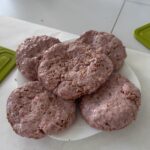
Another fun part of the programme was the product development session in the university’s test kitchen. Although we did not use the biomass we had produced ourselves, we worked with ready-to-use ENOUGH mycoprotein to try several recipes for chicken-style fillets and one for burger patties.
After spending so much time learning about cultivation and processing, it was exciting to explore what mycoprotein could become on a plate!
The programme was intense, but it was absolutely worth it. I came away with new knowledge, practical experience, and new connections—and even more enthusiasm for working with larger industrial bioreactors in the future.
A big thank you to Katarzyna Polanowska for organising such an amazing training school! Thank you also to our outstanding supervisors, Myrsini Sakarika, Wojciech Bialas, Piotr Kubiak, Agnieszka Droždžynska, and Craig Johnston, for your guidance and support throughout the programme.